Humans First, Workers Second: Lessons from Sara Steffens

This Meaningful Work Matters episode features Sara Steffens, Director of the Worker Power Coalition. Steffens is a longtime unionist who has built her life and career around employee activism. She organized her ‘home union,’ Communications Worker of America, in 2008 and has continued to advocate for worker’s rights, decency, and dignity.

All Work Has Dignity

In the context of labor relations, Steffens believes every job is meaningful and important, and all work has dignity. However, not every workplace treats its workers as though their jobs are important and meaningful.

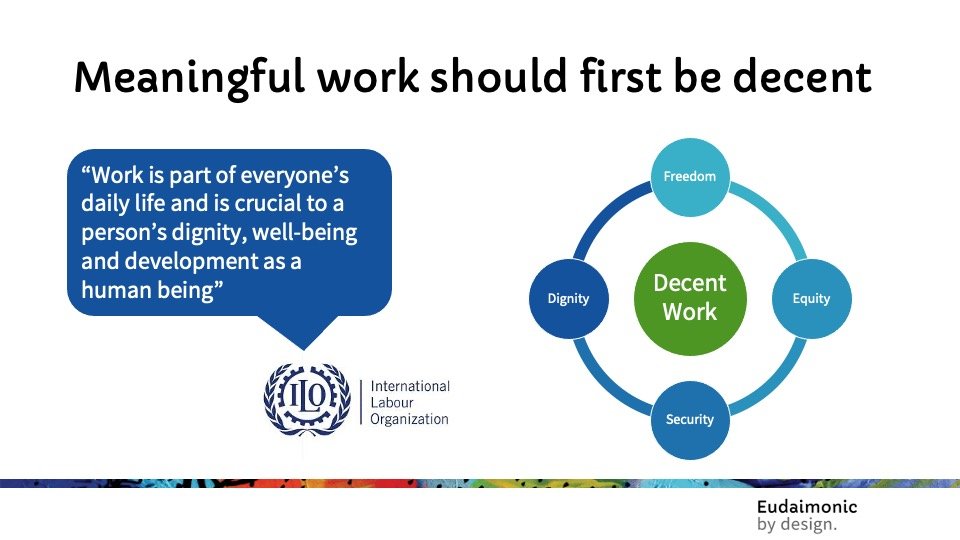
She points out a common disconnect between workers who care deeply about what they do and employers who do not ‘match’ this commitment with decency. A decent workplace, according to the UN’s International Labour Organization, fosters freedom, equity, security, and dignity at work.

Steffens feels this complicated divide is often what unions attempt to bridge through organizing.

Meaningfulness In The Absence of Decency

Should we even talk about meaning if we don’t have decency?

Steffens urges us to remember that most people still care about their work and integrity, even when decency is absent. When there is a high level of decency, meaningfulness may be what work adds to your life, such as role modeling for your children, a connection to the community, or flexibility in caring for a parent or partner.

However, Steffens adds that workers will struggle when there is meaningfulness but not decency because work affects us as humans. In this way, decency must be in place.

When Meaningfulness is Exploitative

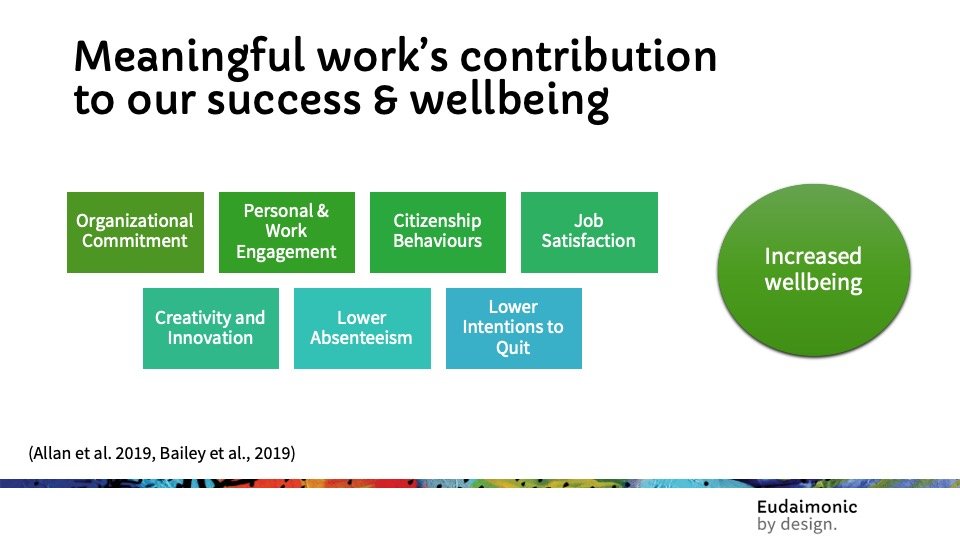
There are countless positives to meaningful work: higher commitment, better performance, corporate citizenship, higher retention, less absenteeism, more creativity, and others.

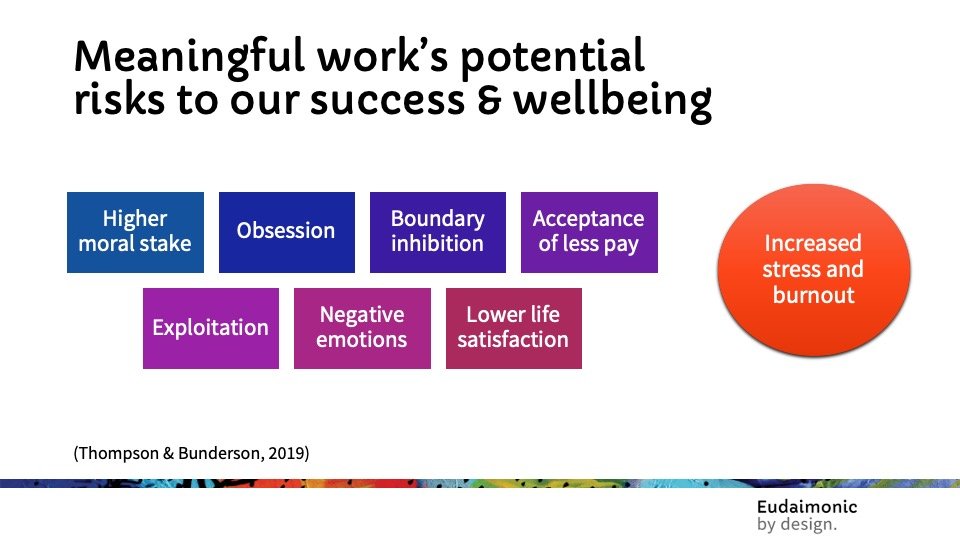
We also know there is a dark side. When there is a high moral stake in one’s work, our passion for work can become an obsession, and the boundaries between work and life disappear. Organizations. In these contexts, employees are prepared to work harder and will do so for less because the work in and of itself is so important. Deliberately or not, organizations have been shown to turn this passion into exploitation.

Steffens reflects on her experience as a former journalist, her passion for her work, and how she felt exploited based on her commitment. This ultimately led her to organize her workplace, which has been the story for many other unions.

Enabling Conditions For Meaningful Work

Unions are often skeptical of consulting firms (like Eudaimonic by Design) that offer well-being and resilience programming. When not positioned correctly - telling an employee that it’s their responsibility to maintain their well-being or resilience in the face of workplace challenges can be tantamount to gaslighting or blaming employees for their own burnout.

Steffens emphasizes that for these types of well-being initiatives to be successful, there should be a baseline level of decency and respect toward workers. These programs can and should extend the employer’s commitment to caring for its workforce.

A ‘Both And’ Situation

The boom of mindfulness and well-being apps being leveraged by employers may be an opportunity to question why we may need these tools at work. While personal resources are essential, employees should also have enabling conditions so they don’t have to manage such things. It shouldn't be an ‘either-or’ but a ‘both and.’

Steffens says there are too many instances where workers are not initiating mindfulness or well-being measures. While these offerings are meaningful, if they are not what employees want or need, then how meaningful are they? Steffens feels this would be better received if workers organized (through a union, ERG, committee, etc.) and spoke to leadership about what they know would be helpful.

The Pandemic’s Impact on Well-Being

Steffens feels the pandemic was a clarifying moment for many workers. Particularly for those on the front lines, it was made clear that they were ‘just dollars and cents’, and this realization cannot be unseen.

There has been a fundamental shift in what people will ‘put up with for money’. Steffens doesn’t feel workers will ever go back to certain practices and that employers who’ve tried to return to the way things were are met with much more resistance.

Lastly, there’s a new acknowledgment of employees’ humanity. We’ve now seen our colleagues as real people managing a household - our ‘work-life’ and ‘personal life’ can coexist. Steffens feels this is a good thing for all of us, as ignoring our personhood at work was never helpful.

The Role of Policy and Meaningful Work

For Steffens, the most significant role of the US government in this context is to set standards for decency and dignity at work that our capitalist system will not. In the past, this looked like safety standards and child labor laws.

Today, it also includes the One Fair Wage movement and preventing harassment and discrimination. Steffens also touches on policies that legally protect workers' right to organize, form unions, collectively bargain, and strike if needed.

The Case for Employee Activism

Steffens reflects on her experience of organizing her workplace as a highly positive personal experience. She developed close relationships with her co-workers, adding meaning to her work, and referred to them as ‘like a family’.

Organized workplaces tend to band together and support each other meaningfully. Standing up for policy and integrating activism at work fosters a sense of purpose and collective commitment based on Steffens’s experience.

When union organizing works, it’s rooted in respecting people’s dignity. Every job is valuable, even for those who may not consider the work as particularly meaningful. We undervalue many jobs as a society, but they all contribute to our global connection as humans.

Further resources to explore:

People Over Perfection: Lessons from Steve Leventhal

This Meaningful Work Matters episode features Steve Leventhal, founder and CEO of WorldBeing. Leventhal shares his perspective on the role of meaningful work within a global social impact organization.

Before pursuing this work, Leventhal had survived a near-fatal car crash, which shifted his perspective on work and his purpose in life. He founded WorldBeing, which he runs alongside his wife, Kate Sachs Leventhal, to empower under-served adolescent youth, especially girls and young women, to help them unleash their inner potential and thrive despite adversity and conflict.

In 2019, Leventhal received the ‘Outstanding Practitioner Award’ at the 2019 World Congress of Positive Psychology for advancing positive psychology practices in ethical and evidence-based ways.

Operationalizing Organizational Values

Leventhal discusses WorldBeing's unique approach, which focuses on developing internal skills and empowering individuals from the inside out. Their programs aim to reimagine self-identity and build emotional intelligence, communication skills, goal-setting abilities, and more. This contrasts with traditional international development approaches that focus more on external infrastructure development.

Leventhal and his organization have built internal training programs that mirror those facilitated externally to foster a deeper connection between the beneficiaries of WorldBeing and its facilitators and ensure the authentic adoption of values within the organization.

The Dark Side of Meaningful Work

Leventhal shares that he has seen the ‘dark side’ of meaningful work due to the challenges and issues his organization aims to address, which are pervasive and devastating to witness. He notices a difference between people who can approach the work from a place of love versus anger. While the anger is justified, it’s an unsustainable resource. Love, connection, and empathy have a more inexhaustible energy to put towards the work. That’s where Leventhal feels the approach to meaningful work must remain intentional and mindful, or else it can easily ‘take you over’.

What The Research Says

There are numerous positives to engaging in deeply meaningful work from a retention, engagement, and performance perspective. However, when the work has a very high moral stake, there is a higher likelihood that people will ‘give it their all’. As Bob Vallerand would describe it, they can go into ‘obsessive passion’ mode. That effort can open them up to work harder and for less, leading to burnout, compassion fatigue, empathy overload, etc.

Carrie Oelberger, who has studied the dark side of meaningful work, particularly for those who work in international aid. The mediating factor that Oelberger uncovered is a concept called ‘boundary inhibition’. This is when meaningful work takes over one’s life and annihilates the boundaries between work and life. The exception is when there is a deep values alignment between the worker and their closest personal relationships. In some ways, the values alignment can make the work even more meaningful and enjoyable.

Leventhal leads WorldBeing alongside his wife, and expresses immense gratitude and appreciation for participating in this work with his partner. The research rings true!

Co-Creating A Shared Values System

Leventhal reflects on the early days of founding his nonprofit and walking a fine line between pushing his envisioned values and listening to what his staff wanted to emulate and foster. At the time, his staff did not have the experience of working for an organization that asked the questions he did, such as: What kind of place do you want this to be?

They mutually landed on values like authenticity, deep listening, forgiveness, and empathy while insisting on accountability. The culture at WorldBeing is a living and breathing result of Leventhal’s vision that also reflects his workforce's genuine aspirations and sentiments.

Leventhal leaves us with two of his organization’s guiding principles: every moment is a choice between love and fear, and perfection is not an option.

For those seeking further exploration:

The Dark Side of Deeply Meaningful Work - Carrie R. Oelberger

The Two Faces of Persistence - Robert J. Vallerand, Tanya Chichekian, Jeremie Verner-Filion, and Jocelyn J. Belanger

Donate to WorldBeing here!

Leading Meaningful Work: Lessons from Wes Adams and Tamara Myles

In this episode of Meaningful Work Matters, Andrew speaks with Tamara Myles and Wes Adams. Myles and Adams discuss impact potential, recruiting for values, and fostering personal connections. They point out that adopting these behaviors can make workplaces more harmonious and productive.

Myles and Adams have been researching and working with organizations and leaders to understand how to bring meaningful work to life for decades. They believe meaningful work is essential for career well-being and that enjoying what we do daily contributes most to our overall well-being. When we know how what we do matters and that we matter, we are more productive, motivated, and happier in both our work and personal lives.

What is Meaningful Work?

According to Adams and Myles, meaningful work refers to work that is not just personally fulfilling but also positively impacts others and contributes to a greater sense of purpose or mission.

Myles explains, "When we spend half of our waking lives working, there's no reason why that work shouldn't be meaningful. When we know how what we do matters and that we matter, we experience a greater sense of meaning in life. Meaningful work contributes not only to our well-being and happiness but also to productivity and motivation at work."

Adams adds that meaningful work is not just about having a strong sense of purpose or mission but also about having a sense of autonomy, mastery, and connection to others in the workplace.

The Role of Leaders in Creating Meaningful Work

Myles and Adams believe leaders are crucial in creating meaningful work within their organizations. The top six leadership practices correlating to employees experiencing meaningfulness at work are focusing on impact, recognizing and nurturing potential, values-aligned hiring, acting with integrity, exercising a growth mindset, and fostering personal connections.

The Importance of Self-Awareness in Finding Meaningful Work

While leaders are essential in creating a culture that fosters meaningful work, Adams and Myles also emphasize the importance of self-awareness in finding meaningful work. Adams explains, "We all have unique strengths, values, and interests that shape what we find meaningful and fulfilling in our work. That's why it's so important to take the time to reflect on what's important to us and what we want to achieve in our careers."

Myles adds that self-awareness also involves honesty about what we're willing to tolerate in our work. "Sometimes we may find ourselves in a job that's not aligned with our values, or that doesn't allow us to use our strengths. In those cases, we need to be honest with ourselves about whether we're willing to make changes to find greater meaning and purpose in our work."

Tips for Finding Meaningful Work

Based on their research and experience, Adams and Myles offer actionable guidance for finding meaningful work:

  1. Reflect on your values, strengths, and interests. Take the time to identify what's truly important to you and what you're passionate about. Look for ways to incorporate those values, strengths, and interests into your work.

  2. Seek out opportunities for growth and development. Look for ways to develop your skills and expertise through training programs, mentorship, or on-the-job learning opportunities.

  3. Connect with others in the workplace. Foster relationships with colleagues and seek out opportunities for collaboration and teamwork.

  4. Be willing to take risks and make changes. Sometimes, finding meaningful work requires taking a leap of faith or changing your career path. Be open to new opportunities and be willing to take risks to find a career that aligns with your values and interests.

  5. Advocate for yourself. Don't be afraid to speak up and advocate for what you need to find greater meaning and purpose in your work; whether asking for more autonomy or seeking out a new role that better aligns with your strengths, advocating for yourself is essential to finding meaningful work.

Conclusion

Myles and Adams believe that finding meaning in one's work is essential for well-being and happiness. They suggest leaders can create meaningful work within their organizations by providing autonomy, mastery, purpose, connection, and progress opportunities. By doing so, leaders can help employees feel valued and connected to the organization's mission and motivated and engaged in their work.


Guest Bios

Wes Adams is a seasoned organizational transformation expert who collaborates with high-performing companies, guiding leaders in developing skills that enhance team performance.

With two decades of experience in successful ventures and consulting for Fortune 500s, startups, and NGOs, Adams has worked with notable clients such as Microsoft, KPMG, and the United Nations. His impactful work has been featured in major publications like the New York Times and Forbes.

As a Master Facilitator for the Penn Resilience Program and a featured speaker at South by Southwest Interactive, Adams is dedicated to fostering cultures that enable employees to find meaning and purpose in their work.

His passion for social impact is evident in his production of HBO's documentary The Out List and his book of interviews on the climate crisis, I Am EcoWarrior.

Tamara Myles is a highly accomplished consultant, trainer, and international speaker with over two decades of experience specializing in elevating business performance. She focuses on productivity and meaningful work, helping leaders cultivate thriving team cultures and drive organizational growth.

Myles's client roster includes Best Buy, BlackRock, Google, KPMG, Microsoft, Brigham and Women’s Hospital, and Unilever. She is also the author of The Secret to Peak Productivity, a guide based on her proprietary Peak Productivity Pyramid™ system, translated into several languages.

Her impactful work has been featured in major media outlets such as USA Today, SUCCESS, Business Insider, Forbes, and the New York Post.


For those seeking further exploration

  • The book Drive by Daniel Pink explores the role of autonomy, mastery, and purpose in motivation and engagement at work.

  • Adams and Myles co-run a consulting practice called, ‘Make Work Meaningful’: makeworkmeaningful.co

The Virtuous Organization: Lessons from Kim Cameron

This Meaningful Work Matters episode features Kim Cameron, a renowned expert in positive organizational scholarship and a faculty member at the University of Michigan's Ross School of Business.

Andrew and Kim discuss the essence of virtuous organizations and the incredible transformation they can bring about. Kim shares insights from his extensive research, including eight key dimensions pivotal in fostering an organization's virtuousness. From gratitude and appreciation to trust and integrity, these dimensions create a holistic environment for individuals to flourish.

Discover inspiring real-life stories of organizations that have embraced virtuousness in their cultures, even during challenging times like downsizing or a pandemic. This conversation with Kim Cameron is a must-listen if you want to understand how virtuous organizations can positively impact performance, well-being, and culture.

Stay connected with Meaningful Work Matters on your favorite podcast platform. Hit that "Follow" button to receive timely updates on new episodes and bonus content. If you love what you hear, take a moment to rate the podcast and leave a review. It helps us reach more listeners and build a community around meaningful work.

Positive Deviance Defined

Kim Cameron has been one of the driving forces behind Positive Organizational Scholarship (POS), an area of research that explores the what, how and why of positively deviant organizations. Organizations that are positively deviant go way beyond the usual expectations or norms. Not only do they achieve bottom-line performance, they also enact virtuous behavior, cultivate positive work culture, foster resilience, create inclusive growth and foster sustainable practices.

The Eight Dimensions of Virtuousness

Cameron identifies eight dimensions that contribute to virtuousness within organizations. These dimensions, when institutionalized, have been directly linked to high performance.

  1. Gratitude and Appreciation: Recognizing employees' contributions through gratitude practices that make people feel valued and valuable.

  2. Dignity and Respect: Work environments where all individuals are treated with dignity and are respected for their inherent worth.

  3. Support and Compassion: Providing empathetic support to employees, especially when facing challenges or difficulties.

  4. Caring and Concern: Closely related to compassion, it creates an environment where employees feel their well-being is a priority.

  5. Meaningfulness and Purpose: having a profound organizational purpose beyond transactional objectives and ensuring employees find meaning by understanding how they contribute to it.

  6. Positively Energizing Activities: Fostering positive energy through activities and behaviors that help others to dream, do, become, learn, and flourish.

  7. Forgiveness and Understanding: Fosters a culture where mistakes are seen as opportunities for growth and learning, promoting an atmosphere of forgiveness.

  8. Trust and Integrity: Ensuring that the organization operates with honesty and ethical principles, which in turn builds trust among employees and stakeholders.

These eight dimensions collectively contribute to an organizational culture that is not just focused on achieving financial success, but also on fostering a positive, virtuous, and supportive work environment. This holistic approach to organizational success is what differentiates such organizations and leads to exceptional performance across various metrics.

Virtuous Organizations in Action

In Derby, Connecticut, Griffin Hospital faced severe challenges, including a reputation for poor service, particularly in its OBGYN department. The crisis escalated when a respected director of operations, Pat Charmel was fired, sparking staff uproar. Employees, valuing Charmel's leadership, boldly interrupted a board meeting, demanding his reinstatement and the executives' dismissal. The board acquiesced, appointing Charmel as both President and CEO.

Charmel quickly addressed the hospital's negative image and discovered financial mismanagement by the previous CEO. Facing potential bankruptcy, he had to make tough decisions, including downsizing, which affected some of his strongest supporters.

Despite these hardships, Charmel's compassionate approach and strategic leadership turned the hospital around. Under his direction, Griffin Hospital recovered and thrived, especially during the pandemic. It prioritized community health by providing COVID testing and vaccination services to vulnerable populations, emphasizing virtuous, community-focused actions over immediate profit.

Courageous Leadership in Virtuous Organizations

To truly listen and be innovative like Pat Charmel requires taking risks. Cameron talks about the kind of courageous leadership and unequivocal support from the top that is required in virtuous organizations. However, change cannot be top-down only; it needs involvement and buy-in from all levels. That means that a critical attribute of leadership in virtuous organizations is the capacity to cultivate a culture of support, innovation, and inclusive change.

Positive Energy and Resilience During Adversity

Cameron illustrates the point by discussing the University of Michigan's Business and Finance Group, where ‘positive energizers’ were identified and empowered to effect change. The energizers were tasked with a challenge to spread positive practices across the organization. These practices ranged from small gestures like bringing flowers to larger systemic changes like reward system overhauls. Remarkably, even during the pandemic, this approach led to significant improvements across various dimensions, proving that positive energy and innovative, people-focused initiatives can build resilience and drive improvement, even in adversity.

Ethics and Empirical Evidence in Virtuous Organizations

Discussing the ethical dimensions of virtuous organizations, Cameron places ethics as a mid-point in a continuum, with unethical behavior on one end and virtuousness on the other. He advocates for organizations not just to avoid harm but to actively do good. Cameron argues that empirical evidence showing the positive impact on bottom-line results can inspire leaders to adopt virtuous practices.

Cameron’s insights highlight the transformative power of virtuousness within organizations. By institutionalizing positive practices, organizations can achieve extraordinary outcomes while fostering employee flourishing.


The Double-Edged Sword of Meaningful Work: Lessons from Andrew Soren

In the bustling world of work and productivity, the quest for meaningful work has become a north star for many. But is all meaningful work beneficial?

Andrew Soren, founder of Eudaimonic by Design, hosts the debut episode of Meaningful Work Matters, which delves into the intricate dance between the highs and lows of engaging in work that matters deeply to us.

The Allure of Meaningful Work

Meaningful work is not a luxury but a fundamental component of our well-being. As Andrew elucidates, work that feels significant and worthwhile can enhance our commitment, engagement, and satisfaction. The benefits extend beyond the personal sphere, fostering a culture of creativity, innovation, and altruism within organizations.

The Hidden Costs

The research also reveals the dark sides of meaningful work: the potential for exploitation and burnout. When work has a high moral stake and becomes an obsession or when employers leverage our passion without decent working conditions, meaningful work can transform from a source of fulfillment into a wellspring of dissatisfaction, stress, and burnout.

The Crucial Element of Decency

Central to the discussion is the concept of "decent work" - safe, equitable, and dignified work. Drawing from the principles set by the Industrial Labor Organization, Soren advocates for a balance between meaning and decency. He argues that meaningful work, devoid of decency, can lead to exploitation and burnout. Conversely, work grounded in respect, equity, and security paves the way for true fulfillment.

Navigating the Path Forward

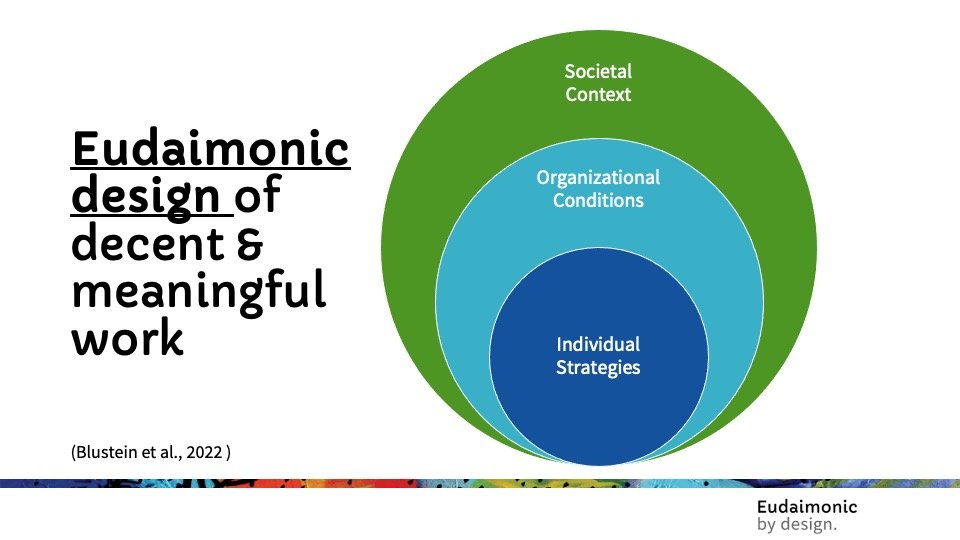
Andrew presents a blueprint for cultivating environments where meaningful and decent work can thrive. We need policies and regulations to ensure decent working conditions for those engaged in meaningful work. In organizations, we can design the cultures, practices, and leadership behaviors that enable those engaged in meaningful work to thrive. At the individual level, we can create interventions to help people understand what makes work personally significant and worthwhile and craft work that makes the most of an individual's strengths, values, and passions.

Your Role in Shaping Meaningful Work

As listeners, we're invited to reflect on our workplace and community roles. Whether you're a leader, policymaker, or team member, this podcast encourages you to consider how you can contribute to a more equitable and fulfilling work culture.

Join the Conversation

Meaningful Work Matters is not just a podcast; it's a call to action. As we navigate the complexities of the modern workforce, let's engage in conversations that matter. Share your thoughts, experiences, and aspirations with us. How do you define meaningful work? What steps can we take to ensure that work is meaningful and decent?

Visit our Resources page for insights and discussions on creating a better world through meaningful work. Together, we can make work a source of joy, growth, and fulfillment for all.

Resources to explore:

How to spark meaningful conversations in the workplace

How to spark meaningful conversations in the workplace

Join our webinar to be part of the conversation and learn what we can do as HR leaders to help people thrive and feel truly connected, engaged and fulfilled at work and beyond.

Embodied Resilience

Embodied Resilience

Our minds and bodies are deeply connected. It may seem like resilience is something that happens only in our heads, but our bodies provide an essential foundation for our overall health and psychological well-being. Fueling ourselves with the right kind of nutrition, getting enough rest, and staying physically active create the necessary foundations to keep us resilient through the toughest of times.

Motivation: Tapping into our human needs

Motivation: Tapping into our human needs

We can be motivated in many ways, but connecting to our inner ‘why’ is almost always more sustaining and powerful than external rewards, praise or punishment. More than four decades of research show that internal motivation is a strong predictor of high performance at work, at school, and in life. And in the context of adapting either to working from home or working in a very different way than we’re used to, helping people find that internal drive is probably one of the most important skills any leader should master.

Belonging: helping others Know they matter

Belonging: helping others Know they matter

Belonging, feeling accepted and included by a social group, is a fundamental human need wired into our DNA. While more and more companies are realizing that true diversity and inclusion require us to build a culture where people feel valued for who they are, in a virtual workplace that requires intentional effort. Here are 4 tips for building a sense of belonging on your team.

High Quality Connections: staying close even when apart

High Quality Connections: staying close even when apart

High quality connections (HQCs) are positive interactions, even brief ones, that make you feel seen, energized, uplifted and engaged whether you do them virtually or face-to-face. In times of stress and “physical distancing”, one of the most important things we can do for our well-being is stay connected to others.

Responding to good news: Celebrating when things go right

Responding to good news: Celebrating when things go right

Most of us have probably spent a fair bit of time sharing bad news recently. We need that kind of social support to cope. But how much time have you spent intentionally sharing good news? Finding and celebrating the good stuff in our lives is a powerful strategy for resilience. Research shows that doing so increases our well-being (for both the person sharing the good news and the one celebrating it), makes us feel like we belong, and is a foundational ingredient to building healthy relationships.

Flow: Focusing for a better day

Flow: Focusing for a better day

Have you found yourself preoccupied by your news feed, depleted by multiple meetings, or distracted by little ones turning your desk into a fort? Many of us are feeling unsettled with our attention scattered on so many different things. Fortunately, research has shown that we can practice strengthening our attention muscles and return to a state of flow for a more enjoyable, energizing, and productive day.

Character Strengths: Harnessing the best of us when we need it most

Character Strengths: Harnessing the best of us when we need it most

We all have character strengths that come more naturally to us and tapping into them can help us stay resilient, maintain engagement and build connection - both when times are going well and also when we’re in crisis. This resource will help you become aware of your strengths, explore them and apply them when you need them most.

Tracking Daily Progress

Tracking Daily Progress

Working all day with lots of distractions can feel futile, as if you’re not making any progress and not getting things done. However, with a few tips and techniques, you can deliberately track your progress and feel better about accomplishing your goals.

Embracing a Growth Mindset: I can’t do it. YET!

Embracing a Growth Mindset: I can’t do it. YET!

When we believe we have the power to develop our capabilities (a growth mindset), we value effort and focus our attention on improvement. By focusing on what we can control, we can grow more resilient in the face of adversity.

Social connection: Setting the tone for effective virtual teams

Social connection: Setting the tone for effective virtual teams

Relationships not only bring meaning and joy to our lives, they increase productivity and innovation at work.  In times of uncertainty, and especially when operating virtually, enabling social connection keeps teams strong and resilient.

Stress Mindset: How stress can work for you not against you

Stress Mindset: How stress can work for you not against you

We all know that stress is bad for you...right? Turns out, research shows that it’s the way you think about stress that impacts your health, more so than the actual stress itself. Shifting your stress mindset can curb negative outcomes and even lead to positive ones.

WOOP: Achieving the right goals for right now

WOOP: Achieving the right goals for right now

When we succeed at our goals, it’s usually because we have both the will-power and way-power to achieve them. WOOP is a tool designed to help you quickly figure out what you really want to do, why it’s important, and how to overcome the internal obstacles that might get in the way.

Self-efficacy: i think i can

Self-efficacy: i think i can

Self-efficacy is the belief we hold in ourselves and in our own abilities. When we believe our actions have a positive impact, it boosts our confidence and helps us try new things, set new goals, learn new skills, adopt new mindsets, and confront challenges head on - even in challenging times.