academics

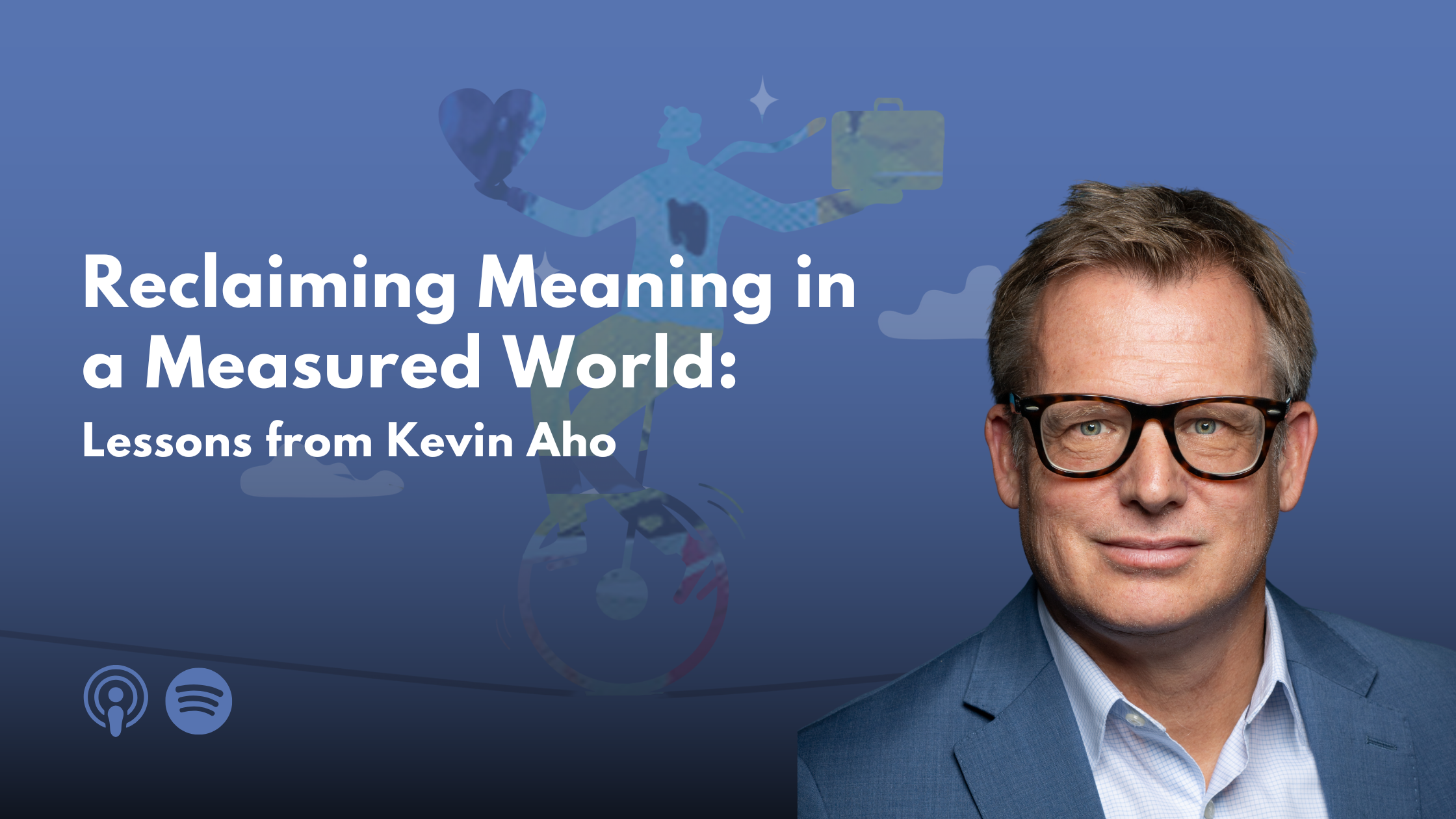
Reclaiming Meaning in a Measured World: Lessons from Kevin Aho

On this episode of Meaningful Work Matters, Andrew speaks with Kevin Aho, Professor of Philosophy and Chair of the Department of Communication and Philosophy at Florida Gulf Coast University. Aho’s work spans existentialism, phenomenology, and the philosophy of health and illness, exploring what it means to live well, face suffering, and find purpose in a world defined by uncertainty.

In this conversation, Aho and Soren examine how neoliberal values have reshaped higher education, the wellness industry, and our collective understanding of meaning. They discuss what happens when human worth is reduced to performance, how wellness culture reflects a deeper emptiness, and why reclaiming community and relationality is essential to living and working with purpose.

The Neoliberal Reshaping of Meaning

In Aho’s view, higher education offers a revealing example of how neoliberal values have transformed our understanding of meaning. Universities, once spaces for curiosity and civic growth, are now driven by the logic of the marketplace. Faculty are measured by performance indicators, student outcomes, and vocational data, rather than the depth of learning or reflection they foster.

This shift has turned places of inquiry into systems of production.

As Aho explains, professors increasingly must justify their existence by proving the financial or career value of their disciplines. Fields such as philosophy, literature, and the arts, once central to understanding what it means to be human, are often the first to be cut.

Aho views this as part of a broader cultural trend: the idea that worth must always be earned, quantified, or monetized. The result is a narrowing of imagination. When we view education and work through the lens of efficiency, we lose the conditions that allow people to think freely, explore complexity, and cultivate meaning.

The “Empty Self” and the Rise of Wellness Culture

Aho draws on the work of social psychologist Philip Cushman, who coined the term “the empty self.” The concept describes a cultural condition in which people feel an inner void, a loss of belonging and purpose. Instead of filling that space with relationships and community, we are encouraged to consume - products, programs, and experiences that promise fulfillment but rarely deliver it.

The modern wellness industry reflects this dynamic.

Health and happiness are treated as personal responsibilities, while structural inequities and collective challenges are ignored. Wellness becomes something we purchase rather than something we nurture together.

Aho’s critique is not an attack on self-care, but a call to see it in context. When well-being becomes another individual project, it reinforces the illusion that we are independent and self-sufficient. True wellness, he suggests, begins when we recognize our interdependence and acknowledge that care must extend beyond the self.

Recovering Relationality and Community

Throughout the conversation, Aho returns to a simple yet profound idea: we become who we are through our relationships with others. The self, as he sees it, is not an isolated unit but a web of connections shaped by love, care, and shared experience.

In this light, the path to meaning does not require radical transformation or grand political action. It begins in everyday acts of community, such as creating art, growing a garden, sharing a meal, or teaching with empathy. These are the spaces where we rediscover belonging and rebuild a sense of common life.

For Aho, the work of philosophy is a way of paying attention to what it means to live well. It invites us to see that meaning is not something we find alone. It grows through participation, relationship, and care for the world around us.

Practical Reflections

Aho and Soren’s conversation offers real guidance for how we might approach our work and lives.

  • Reflect on how success is defined in your environment. What might it look like to expand those definitions to include care, curiosity, and connection?

  • Pay attention to the spaces where meaning emerges naturally. This might be through creative work, community involvement, or relationships that invite honesty and compassion.

  • Practice relational awareness. Instead of striving for self-improvement, focus on how your presence supports others and how their presence shapes you in return.

These small shifts resist the pull of busyness and productivity, making space for the slower, more human work of meaning-making.

Final Thoughts

Aho reminds us that meaning is not a concept to chase but a condition we create together.

In a culture that rewards speed and productivity, he offers a slower, more human alternative - one that begins with care, curiosity, and the willingness to see our lives as intertwined.

Through the ways we work, create, and connect, we each have the power to help rebuild the shared spaces where purpose and meaning take root in our lives and work.
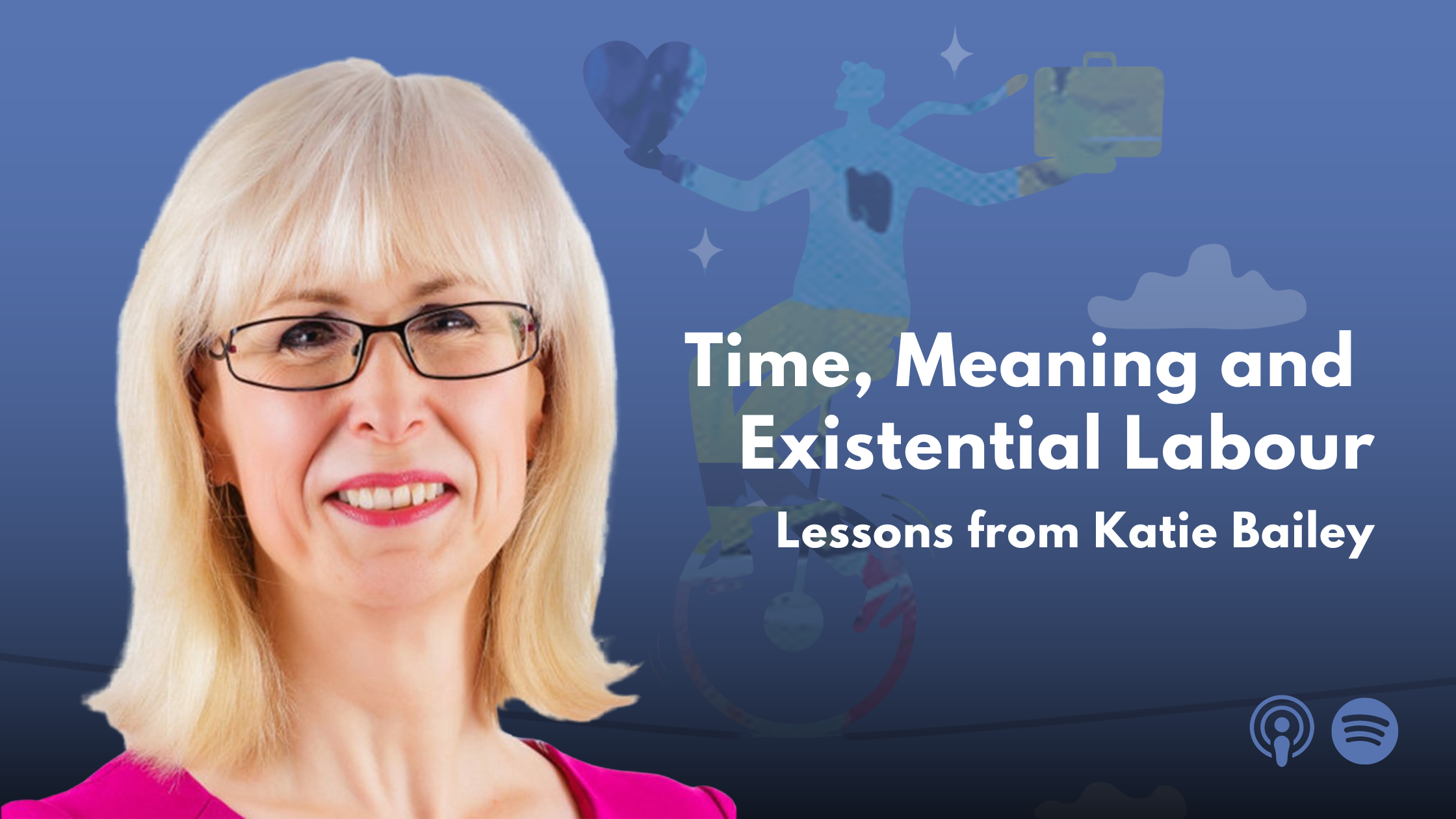
Time, Meaning and Existential Labour: Lessons from Katie Bailey

This Meaningful Work Matters episode features Dr. Katie Bailey, a Professor of Work and Employment at the King’s College London. Her research focuses on meaning and purpose at work, temporality and interstitial times and spaces in organizations, employee engagement, and strategic human resource management.

Katie takes us on a tour of the various ways that meaningful work has been defined in the academic literature, the ways that time truly matters when it comes to finding meaning at work, and how we can create an ethical environment for meaningful work by reducing the gaps between what we say and what we do when it comes to designing roles, tasks, interactions, and building organizational cultures that support individuals as they pursue meaningful work.

The Multi-Faceted Nature of Meaningful Work

Bailey has spent years exploring the complexity of meaningful work in research and practice. She emphasizes that meaningful work goes far beyond job satisfaction or employee engagement because it is intertwined with our most human sense of identity and purpose. She notes that in the literature, there are many different definitions of meaningful work, but they can be primarily broken down into two broad perspectives:

  1. Subjective Dimension: From one perspective, meaningful work is seen as subjective, essentially down to the individual. It's in the eye of the beholder, where people decide daily whether their work is subjectively meaningful to them. Psychologists who regard meaningful work as an attitude similar to job satisfaction often hold this view. It's a personal assessment based on individual feelings and perceptions.

  2. Objective Dimension: The other perspective views meaningful work as an objective attribute that some jobs have and others don't. This view is shared by sociologists, ethicists, and political theorists. They believe that society objectively determines meaningful work, with specific attributes that make it meaningful. These attributes include autonomy, dignity, freedom, and receiving feedback. Jobs possessing these characteristics are considered meaningful objectively, regardless of an individual's feelings or perceptions.

Four Pillars of Meaningful Work

Bailey points to the work of Marjolein Lips-Wiersma, who maps meaningful work into four key pillars: contribution, belonging, self-actualization, and being your best self. These pillars provide a roadmap for individuals and leaders to assess and enhance the meaningfulness of their work. Contribution emphasizes the impact of one’s work on the greater good while belonging underscores the importance of community and connection in the workplace. Self-actualization speaks to the personal growth and development that work can foster, and being your best self highlights the alignment of work with one’s core values and strengths.


The Role of Time in Finding Meaning

Bailey’s insights into the temporal aspects of meaningful work are pioneering. She highlights how autonomy and the freedom to manage one's time can significantly influence the sense of fulfillment in one's job. However, her latest research explores how the ability to see past contributions or future impact can all influence perceptions of meaningfulness. Bailey shares a fascinating example of her research with stonemasons repairing centuries-old cathedrals in the UK. By seeing the "banker marks" left by prior workers hundreds of years ago and knowing their marks would be viewed similarly far into the future, stonemasons tend to feel a profound long-term connection to their work.

The Double Edge of Meaningful Work

Bailey points out many positive benefits to individual well-being and organizational performance when people are engaged in meaningful work. Still, there are dark sides to meaningful work, which are essential to be aware of. She highlights two key aspects:

  1. Sacrifices for Meaningful Work: Bailey points out that when individuals see their work as deeply meaningful, they might be willing to make detrimental sacrifices to their well-being. This suggests that pursuing meaningful work can sometimes lead to neglecting personal health, work-life balance, or other aspects of life, as the individual becomes overly invested in their work.

  2. Existential Labor: Another concept Bailey discusses is "existential labor." This occurs when organizations put intense cultural pressure on employees to find their work meaningful. Employees might be continually told that their work is meaningful and fulfilling. However, if they don't genuinely feel that sense of meaningfulness, they may start acting as if they find their work meaningful when they do not. Existential labor is the act of pretending or performing to meet external expectations. It can be seen as a form of emotional labor where employees must manage and modify their emotions and expressions to align with organizational expectations, even if these do not reflect their true feelings.

Ethical and Practical Insights for Fostering Meaning

Bailey emphasizes the importance of organizations creating an environment that enables individuals to find their version of meaningfulness. Bailey discusses the critical role of leaders in creating an environment where meaningful work is accessible to all. This involves a commitment to ethical leadership practices, prioritizing employee well-being, and aligning organizational goals and job design with espoused values. From a practical standpoint, Bailey suggests ways to embed meaningful work into the fabric of organizational culture. This includes designing roles that provide a sense of significance, encouraging positive interactions among team members, and aligning tasks with a clear and compelling organizational purpose. These strategies are essential for leaders aiming to reconcile personal values with work demands and those seeking to manage stress and prevent team burnout.

Final Thoughts

Katie Bailey’s profound insights on meaningful work remind us that the journey to finding meaning in our professional lives is deeply personal yet universally impactful. Meaningful work is not just about the tasks we perform but also about the environment we cultivate, the relationships we build, and the ethical considerations we uphold.

As professionals and leaders striving for positive change, let's embrace the responsibility of creating an ecosystem where every individual can discover what meaningful work means to them. In doing so, we enhance our experiences and contribute to a culture of well-being and purpose that extends far beyond the walls of our workplaces.